
Housing & Homelessness in Rural Newfoundland & Labrador
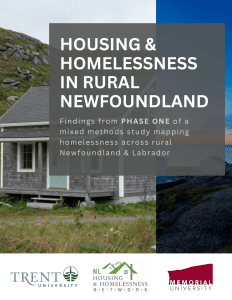
Homelessness affects rural communities across Newfoundland and Labrador. However, limited data makes it difficult to understand the full scale of the issue. Phase One of this mixed-methods research study begins to address this gap by gathering information from service providers across rural and remote communities.
Click the image to read the full Phase 1 findings report:
Key Findings at a Glance
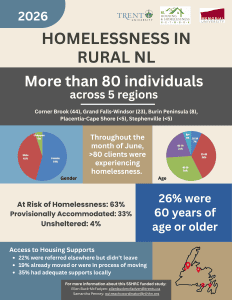
- More than 80 clients were identified as experiencing homelessness within the 5 study regions.
- 54% of clients were female.
- 26% of clients were older adults aged 60 and over.
- 16% of clients were Indigenous.
- 24% of clients experienced chronic homelessness.
- 51 clients were at risk of homelessness.
- 27 clients lived in temporary or provisional accommodation.
- Most clients received income assistance, disability benefits, and/or seniors benefits.
- Low incomes and high rents were among the primary factors contributing to homelessness.
- Mental illness, substance use, family breakdown, violence, health, and disability also contributed to housing instability.
What Comes Next?
Phase One provides an important starting point for understanding homelessness in rural Newfoundland and Labrador. However, the researchers caution that the findings likely underestimate the number of people experiencing homelessness. Some people may not connect with service organizations. Others may experience homelessness in less visible ways.
Phase Two will build on these findings by exploring the experiences, challenges, strengths, and opportunities within different rural communities. It will also examine housing and homelessness from the perspectives of clients and service providers. If you are interested in contributing to these conversations please contact Samantha Penney (outreachcoordinator@nlhhn.org) or Dr. Ellen Buck-McFadyen (ellenbuckmcfadyen@trentu.ca).
This research was supported by funding from the Social Sciences and Humanities Research Council of Canada.